
Yorkshire Water falls to one star as Calderdale records thousands of hours of sewage discharges

The company’s latest environmental assessment records a 72% rise in sewerage pollution incidents across its region. In Calderdale, monitoring figures show several prolonged overflow discharges, while accounts disclose £1.392 million in remuneration for chief executive Nicola Shaw who has today announced her resignation.
Yorkshire Water has received the lowest environmental rating available from the Environment Agency, as Calderdale Inside Out reveals the extent of storm-overflow discharges at sites across the borough.
The EA’s assessment, published on 29 October, gives the company one star out of four for its performance in 2025, down from two the previous year. And if you are asking whether that is bad: well, it can’t get any worse.
There were 260 sewerage pollution incidents across Yorkshire Water’s operating area, compared with 151 in 2024: an increase of 72%.
For Calderdale residents, the latest data shows the impact of overflowing sewage. At Eastwood wastewater treatment works, monitoring recorded 129 spills lasting a combined 2,182 hours during 2025. At Princess Bridge No 2, it recorded 128 spills over approximately 1,650 hours.
In response to the one star rating leader of Calderdale Borough Council Dan Sutherland said:
"The Government need to get a grip on our nation's water companies and particularly Yorkshire Water. From the environmental issues to the 'emergency' roadworks, people are calling for change. We hear a lot of words from Calderdale's MPs, it's about time words became action."
Huge pay, big debt, more promises
Yorkshire Water has promised to upgrade 19 Calderdale overflows by 2030. Its latest accounts also show rising investment, substantial debt and seven figure executive remuneration.
The Environment Agency’s assessment classifies Yorkshire Water as a poorly performing company – the lowest possible rating. It recorded 13 serious pollution incidents, all from sewerage assets. The previous year also had 13 serious incidents overall, although three involved water-supply assets.
Those figures describe classified pollution incidents across the company’s region, not to be confused with the much larger number of occasions when storm overflows operated.
Combined sewers carry both sewage and rainwater. Overflows release excess flows when the system reaches capacity, helping prevent sewage backing up into buildings. Their monitors record when discharges happen and how long they last. Those readings do not establish the volume released, the damage caused, or whether a particular discharge breached its permit.
Check out Calderdale's sewage discharge table showing ten borough-wide sites with lengthy recorded discharges 2025 storm-overflow return, ordered by duration.
| Overflow site | Recorded spills | Total discharge hours |
|---|---|---|
| Eastwood wastewater treatment works | 129 | 2,182 |
| Princess Bridge No 2 | 128 | 1,650 |
| Crow Nest Bridge | 91 | 1,533 |
| Ripponden sewage treatment works | 56 | 1,311 |
| Hebble Lane | 116 | 1,170 |
| Delight sewage pumping station | 58 | 913 |
| Eastwood No 2 | 96 | 806 |
| Halifax Copley sewage treatment works | 74 | 784 |
| Bonegate Lane | 120 | 737 |
| New Inn West Street | 77 | 604 |
Eastwood’s recorded duration is equivalent to about 91 days spread across the year – which calls into question justification for the lengthy discharge. Ripponden’s overflow discharged to the River Ryburn; Delight’s to Colden Water; Hebble Lane’s to Hebble Brook. Several others discharged to the Calder.
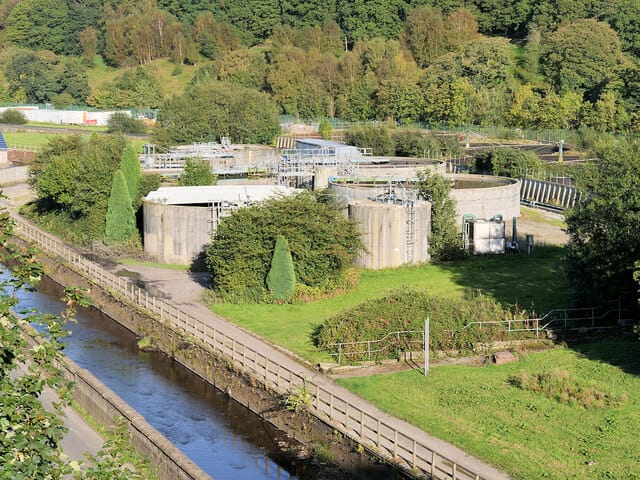
For nine of these ten sites, the return identifies insufficient hydraulic capacity as the reason associated with the high spillage rate. Ripponden’s entry identifies surface-water infiltration. These entries help explain where engineering work may be needed, but do not supply a completion date or a promised reduction for each location.
Yorkshire Water’s response to the rating acknowledges that its environmental performance in 2025 was inadequate. Asset management director Stephanie Pullan said the company had strengthened monitoring and incident response, including installing more than 27,000 sewer-level monitors.
The company also points to five overdue environmental schemes in West Leeds that contributed to the assessment. It says one is now complete, with the remaining four under construction or progressing through planning, and all are due to finish by 2028.
In Calderdale, Yorkshire Water announced in April that work had begun on a £2 million scheme at Syke Lane, Brighouse, adding 180,000 litres of storage to the sewer network. Completion was expected in early 2027.
The company says earlier work there, costing £1.8 million, helped reduce spills from 110 in 2023 to 32 in 2025
The company has committed to upgrade nineteen Calderdale overflows by 2030. But there is still no site-by-site schedule showing the work, completion dates and reductions expected.
CEO steps away from seven figure package after one star rating
Yorkshire Water has today (30th October) announced the departure of CEO Nicola Shaw following the Environment Agency’s one star rating. But reported remuneration totalled £1.392 million across Yorkshire Water and its ultimate parent, Kelda Holdings is likely to cause uproar given the company’s performance.
The audited remuneration table records £642,000 salary, £13,000 taxable benefits and £77,000 retirement benefits from Yorkshire Water: £732,000 altogether. Kelda Holdings paid a further £660,000 in fixed fees. Her combined package was approximately 3.2% higher than the previous year’s £1.349 million.
Shaw waived performance-related pay for 2025/26 – although critics are likely to question “What performance?” given the one star rating. Ofwat has a performance prohibition in place, preventing executives being awarded bonus payments when companies are performing poorly.
Yorkshire Water’s profit is likely to come under intense scrutiny given the scathing Environment Agency rating. Revenues increased from £1.299 billion to £1.640 billion in 2025/26, and operating profit rose from £324.2 million to £464.2 million.
£85.1 million in dividends were paid, compared with £52.5 million the previous year. Its accounts state none of those dividends went to the shareholders of ultimate parent Kelda Holdings.
Yorkshire Water says its £8.3 billion programme for 2025–2030 will improve infrastructure and environmental performance.
|


Comments ()